
In 2025, with interest rates fluctuating and the cost of living still rising, many consumers are turning to debt consolidation loans as a strategic financial move. But is consolidating your debts really the best decision? This comprehensive guide explores what debt consolidation loans are, how they work, and whether they make sense for your unique financial situation.
1. What Is a Debt Consolidation Loan?
A debt consolidation loan is a personal loan used to pay off multiple high-interest debts—such as credit cards, medical bills, or payday loans—by combining them into one lower-interest loan. This can simplify your finances and potentially reduce your total interest paid.
Key Features:
- Single monthly payment
- Lower interest rate (in many cases)
- Fixed repayment timeline
- No collateral required (if unsecured)
2. How Debt Consolidation Loans Work
Once approved for a debt consolidation loan, your lender either pays off your existing debts directly or disburses the funds to you so you can do it yourself. Then, you repay your new loan in monthly installments.
Example:
- You owe $5,000 across three credit cards with interest rates of 20%, 22%, and 25%.
- You qualify for a $5,000 debt consolidation loan at 9% over 36 months.
- Your monthly payments are reduced, and you pay less interest overall.
3. Pros of Debt Consolidation Loans
✅ Lower Interest Rates: Especially if you have good or improving credit.
✅ One Monthly Payment: Simplifies budgeting and minimizes missed payments.
✅ Fixed Repayment Term: Helps with long-term financial planning.
✅ Improved Credit Score: Paying off credit card balances can lower your credit utilization ratio.
✅ Reduced Stress: No more juggling due dates, fees, and collectors.
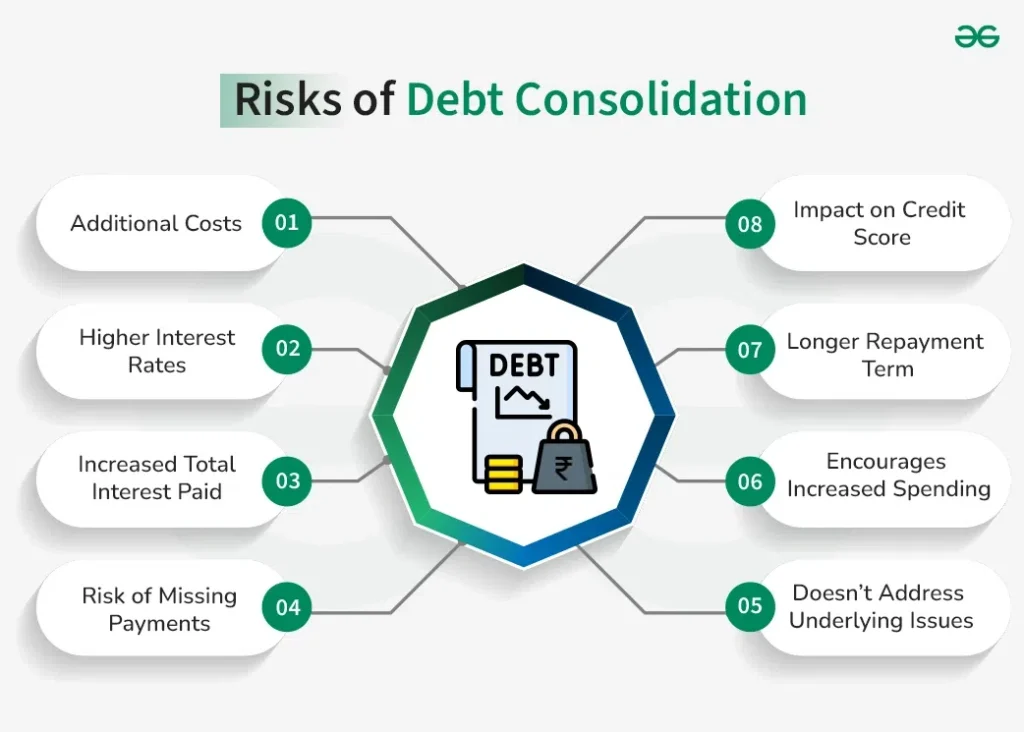
4. Potential Drawbacks to Watch Out For
❌ May Not Save Money: If your new loan has a long term or higher interest rate.
❌ Fees and Costs: Origination fees, prepayment penalties, or late fees could apply.
❌ Temptation to Re-spend: Paying off credit cards may tempt you to use them again.
❌ Not a Fix for All Financial Problems: Doesn’t address underlying spending habits.
5. Who Should Consider a Debt Consolidation Loan?
Debt consolidation loans work best for borrowers who:
- Have multiple high-interest debts.
- Maintain a steady income.
- Possess a fair to good credit score (typically 620+).
- Want to simplify their repayment process.
- Are committed to not incurring new debt.
If you meet these criteria, consolidation could be a smart step toward financial stability.
6. Who Should Avoid It?
You may want to reconsider if:
- Your credit score is very low, making it hard to qualify for a lower rate.
- You can’t commit to regular payments.
- You haven’t addressed the reasons behind your original debt.
In such cases, alternatives like debt management plans or credit counseling might be better.
7. Best Lenders for Debt Consolidation Loans in 2025
Here are some of the most recommended lenders this year:
a. SoFi
- APR: 6.99% – 21.78%
- Amount: $5,000 – $100,000
- Highlights: No fees, offers unemployment protection.
b. LendingClub
- APR: 8.98% – 35.99%
- Amount: $1,000 – $40,000
- Highlights: Good for fair credit; direct payments to creditors available.
c. Marcus by Goldman Sachs
- APR: 6.99% – 24.99%
- Amount: $3,500 – $40,000
- Highlights: No fees, customizable payment dates.
d. Upgrade
- APR: 7.96% – 35.97%
- Amount: $1,000 – $50,000
- Highlights: Accepts lower credit scores; has credit-building tools.
8. How to Compare Debt Consolidation Loans
To choose the right lender and loan:
- Compare APRs, not just interest rates.
- Check origination fees (0%–8%).
- Review repayment terms and flexibility.
- Use loan comparison tools like NerdWallet, Bankrate, and Credible.
- Read reviews from borrowers.
9. Steps to Apply for a Debt Consolidation Loan
Here’s a step-by-step process:
- Check Your Credit Score: Use free tools like Credit Karma.
- Calculate Your Total Debt: Know exactly what you need to consolidate.
- Research Lenders: Find those that work with your credit and debt profile.
- Prequalify: Get rate estimates without a hard credit check.
- Apply for the Loan: Submit necessary documents—ID, income proof, credit history.
- Pay Off Old Debts: Use funds immediately to clear existing balances.
- Stick to Your New Repayment Plan: Set reminders or automate payments.
10. Alternatives to Debt Consolidation Loans
If you don’t qualify or consolidation doesn’t fit, consider:
- Balance Transfer Credit Cards: 0% intro APR offers (if credit is good).
- Home Equity Loans/Lines: Lower rates but risk your home.
- Debt Management Plans: Offered by nonprofit credit counseling agencies.
- Bankruptcy: Last resort for overwhelming debt.
11. Is Debt Consolidation Right for You in 2025?
Ask yourself:
- Will I save money on interest?
- Can I commit to monthly payments?
- Do I have a plan to avoid new debt?
- Will this help my financial future?
If you answer yes, a debt consolidation loan could bring clarity and control to your financial life.
12. Pro Tips for Successful Debt Consolidation
✅ Create a Budget: Track spending and prioritize loan repayment.
✅ Don’t Close All Old Accounts: Keep them open to maintain credit history.
✅ Use Automatic Payments: Avoid late fees and protect your credit.
✅ Communicate with Creditors: If struggling, ask about hardship options.
✅ Stay Focused: Avoid new credit card purchases until debt is cleared.
Conclusion: Empower Your Finances with the Right Loan
Debt consolidation loans in 2025 offer a real chance to simplify your finances, lower interest rates, and become debt-free faster. But they’re not a silver bullet. The right move depends on your habits, discipline, and commitment to change.
Make your decision after evaluating your current debt, credit score, and financial goals. Use comparison tools, read the fine print, and work with trusted lenders. With the right approach, consolidating your debts can be a powerful step toward financial freedom.